
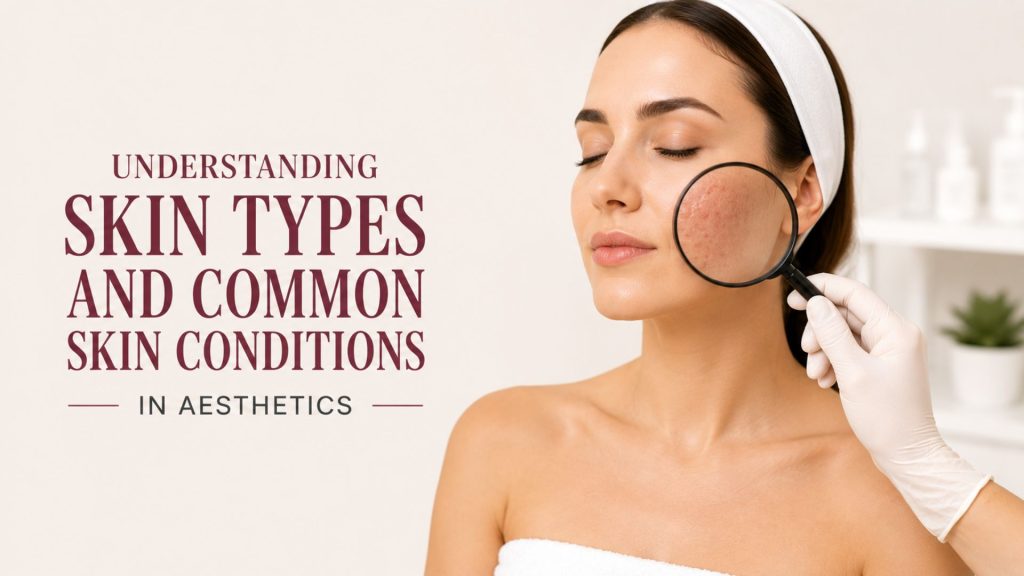
Reading the skin is the first skill every esthetician needs. Before any treatment, a professional must identify the client’s skin type and any conditions present – because the right approach depends entirely on the skin in front of you. Here is a clear introduction.
The main skin types
- Normal – balanced, neither too oily nor too dry
- Dry – lacks oil, can feel tight and flaky
- Oily – produces excess sebum, prone to shine and congestion
- Combination – oily in some areas (often the T-zone), drier in others
- Sensitive – reacts easily, needs gentle products and care
Why skin type guides every treatment
Product choice, technique and treatment intensity all depend on skin type. Using the wrong products on sensitive or oily skin can cause irritation or worsen problems, which is why analysis comes before action.
Common skin conditions
Estheticians also learn to recognise common conditions such as acne, dehydration, pigmentation and the visible signs of aging. Understanding these – and knowing what is within an esthetician’s scope versus what needs a medical referral – is a core professional responsibility.
Acne: a closer look
Acne is one of the most common concerns clients bring to a beauty centre. Professionals learn its causes and how to support the skin with appropriate treatments and advice, always within safe, hygienic limits.
Turning knowledge into results
Skin science is the backbone of aesthetics. A course that teaches anatomy, physiology and pathologies – as Frontera’s aesthetics programmes do – gives you the judgement to treat every client safely and effectively, not just follow a fixed routine.
Ready to start your beauty career? Frontera Academy – hands-on training, official MEI/MFE certification and international mentors in Tirana. Apply now!