
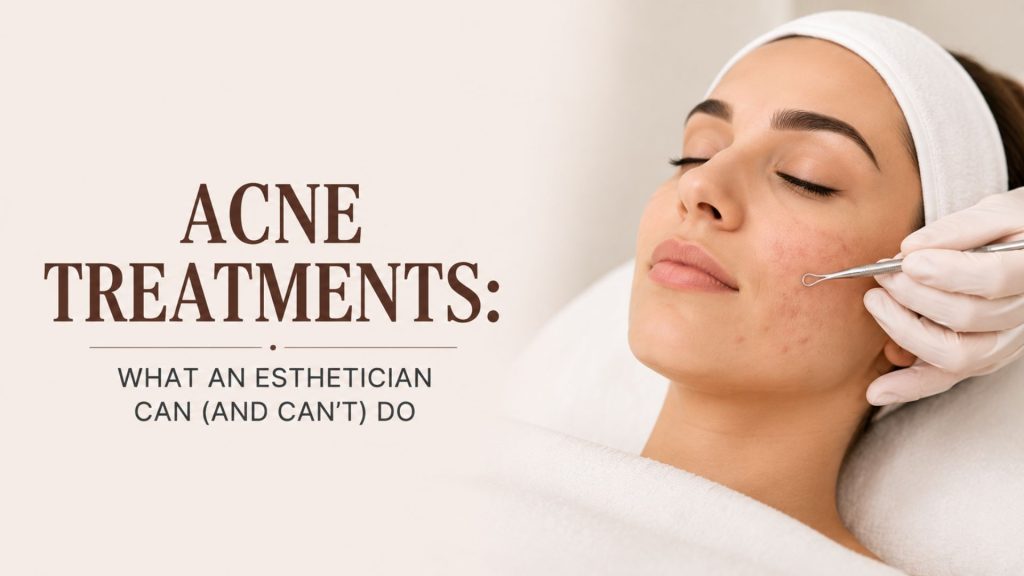
Acne is one of the most common concerns clients bring to a beauty centre, so knowing how to help – safely and within professional limits – is an essential esthetician skill. Here is a clear, responsible overview.
Understanding acne first
Acne has many causes, from excess oil and clogged pores to hormonal and lifestyle factors. A trained esthetician learns to recognise different presentations and understand what is happening in the skin before choosing an approach.
What estheticians can do
- Deep, professional cleansing to reduce congestion
- Appropriate facial treatments for oily and acne-prone skin
- Advising on suitable products and a home-care routine
- Supporting overall skin health with regular, gentle care
Knowing the limits
An important part of professionalism is knowing when a client’s condition needs a doctor or dermatologist rather than beauty treatment. Severe or medical cases should be referred – recognising this boundary protects both the client and your reputation.
Client care and expectations
Managing expectations honestly is key. Improvement takes consistent care over time, not a single session. Estheticians who communicate this clearly build trust and long-term client relationships.
The knowledge behind the skill
Handling acne-prone skin well relies on understanding skin anatomy, physiology and common pathologies – exactly what Frontera Academy’s aesthetics programmes teach, so you can help clients safely and effectively.
Frequently asked questions
Can an esthetician cure acne?
Estheticians support and improve acne-prone skin with professional care and advice, but medical acne should be referred to a doctor. Beauty treatment and medical treatment are different.
Ready to start your beauty career?
Frontera Academy – hands-on training, official MEI certification and international mentors in Tirana. Apply now.